Thursday, October 19, 2017

El Salvadoran Wedding Registry

The Man. The Legend. Evan Mario Luthye.

I met Evan while attending Cornell College. We both played football. We both pledged to the same fraternity. We both liked cheese. It was a good friendship from the start. Since then, Evan has been a fantastic friend, way better than I could ever hope to be, so I felt compelled to make an effort to get him and his beautiful bride-to-be, Becca, a thoughtful gift for their wedding. Evan's father's family is from La Libertad in El Salvador, so I traveled to the small Central American village to find a gift there...

...well, full disclosure, I was already in the area and figured I'd stop by.

I departed Nicaragua aboard a shuttle that cost approximately $40. It left early in the morning so we could cross two international borders and arrive in the small town of El Tunco before the day was over. Although I am comfortable taking the cheaper local buses while traveling within one country, I had heard enough border crossing horror stories from other travelers to encourage me to take a more accredited shuttle company.


When I arrived in El Tunco, I procured a shared room at a hostel just around the corner from the main road. The Tunco Lodge is located across the alley from the Rio El Tunco, a small murky stream that slowly flows from the surrounding mountains into the Pacific Ocean. Although I only paid for a shared room, the owner mistakenly grabbed the key to a private room. By the time he discovered his error he didn't want to retrieve the correct key, so he gave me the private room instead (for the same price). I was happy to accept the upgrade.


After exploring the beach-side restaurants and walkways, I ordered four pupusas from a small roadside stand. A thick tortilla shell with a cheesy savory filling, the pupusa is the official dish of El Salvador. After lunch I returned to the hostel pool where I conversed with fellow travelers. The majority of individuals who visit this town have one intention, to ride the epic waves pounding this part of the Central American Coastline. So surfing was usually the topic of most of my conversations, however, I'll gladly listen to someone else tell me something about which they are passionate (even though I have never surfed a day in my life).


The next day I paid twenty-five american cents to board a local bus and travel the short distance south to Puerto de La Libertad, the home of Manolo Flamenco, father to Antonio Flamenco, and grandfather to Evan Mario Luthye. As soon as I got off the bus in La Libertad, however, it was clear this "small village" was really more of a city and thus any hopes of running into someone who may know the Flamenco family vanished. I made a few attempts at talking with shop owners as to whether they knew the family, but combined with my broken Spanish this request was not received all that well.


I spent the day at the fish market located on the long wooden pier jetting into the Pacific Ocean with wall to wall vendors. The most captivating fare was a bag of baby hammerheads one gentleman dumped directly onto the wooden planks of the pier. Before I could take a photo all the little sharks had been snapped up by local consumers. This market is probably not up to FDA standards, but fresh nonetheless.


In the end, I found some local vendors along the boardwalk from which to purchase my wedding gifts for Evan and Becca. The first, a small framed piece of art featuring a feather on which the artisan painted a few brightly colored Macaws. The second, two young girls who made jewelry for a local organization that supports young female entrepreneurs. I figured a necklace made of some local beads would be sufficient to fulfill Becca's hippie standards.


After a few more nights in El Tunco, complete with a few cafes (solo negro, por favor) in the mornings and more conversations with new friends, I hopped a shuttle with a few other travelers to traverse the final length of the small coastal country to its northern border, observing the remnants of past volcanic activity and a plethora of colorful flora, before entering Guatemala. About an hour later we crossed one more border taking us back into Honduras where my Central American adventure began almost three months prior.

This final border crossing allowed me to utilize the full extent of my knowledge of the Spanish language. We had just exited El Salvador, entered Guatemala, was exiting Guatemala and attempting to re-enter Honduras, all within a couple hours. It should have been a straight forward process, however, the gentleman at the Guatemala port of entry had post dated our visa stamps in our passports. Because of this oversight, the port of exit from Guatemala couldn't just give us an exit stamp with the correct date because, according to their system, none of us had technically entered the country yet. Although our driver quickly stepped in to help, I still had to explain my three months of travel itinerary to the immigration representative - all in Spanish. Although I'm sure I sounded like a toddler to her, I must have made a little sense because she ultimately stamped my passport with the correct date and I was allowed to leave the country.


Content with my recent accomplishment of troubleshooting an international immigration problem in another language, I settled into the rest of the trip as we made our way to the town of Copan Ruinas in Honduras. However, I still had one more adventure remaining before returning to the United States. Stay tuned for that in the next blog.

Thanks again for reading. I apologize for the longer interval between the last post. I'm moving around bit and will hopefully get back on a better routine soon. I'm settling down in Denver now and will continue writing from here. Talk with you soon!

Dustin

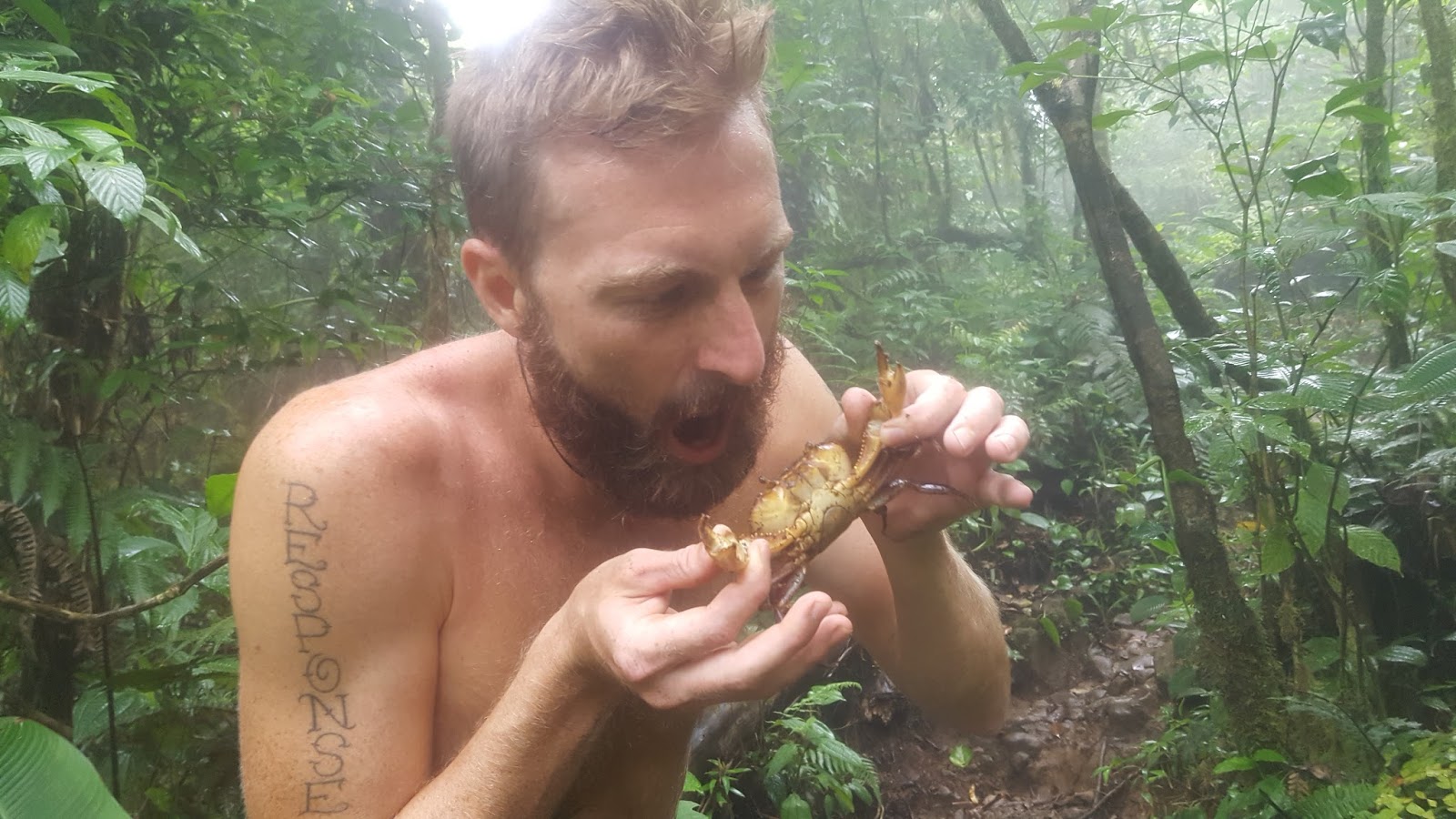
Probably what Evan looked like as a kid.

Sunday, August 20, 2017

Decompression Redemption: The Day I Died in a Volcano

Diving in Laguna de Apoyo
I became a certified open water diver over ten years ago. I completed my two open water dives between the Santa Barbara coastline and the Channel Islands after I relocated to California for a new job. My final certification dive was highlighted by an adult harbor seal who swam around me as I ascended the rope back to the boat at the end of the dive.


A look back at the Santa Barbara Coastline
The seal circled around my legs, then once more around my waist before stopping directly in front of me - her head only a few inches from the front of my mask. She hovered in front of my body for what seemed like an eternity. Her eyes were dark in color, but maintained a tone of softness as if she was just as curious about me as I was of her - which I can only imagine was the case.


Humpback whales surfacing in the waters near the Channel Islands
My arms instinctively went around her waist but I was still a bit cautious to pull her any closer than the few inches currently separating her blubbery skin and the soft material of my wetsuit. However, she then leaned in and kissed the tempered glass of my black framed dive mask. Clearly embarrassed, she turned and escaped into the shallow waters surrounding the island of Santa Cruz.


As the weeks turned to months and the months turned to years, I slowly watched the time pass since my certification dive and the stolen kiss from my aquatic mistress. Ten years would pass before I would once again do a safety check with a dive buddy, and it would take place on the small Caribbean island of Utila off the east coast of Honduras. I was a bit scared when I began my first descent into the warm tropical waters to begin my refresher course. I bobbled around a bit until I gained control of my buoyancy and slowly began to re-learn what it's like to live underwater.

A sunset on the island of Utila
Squirrels, angels, and spotted drums would be just a few of the many types of colorful fish that would scurry around as bubbles would escape my mask. Giant crabs and black colored coral would pass by my field of vision as I swam through rock caves and over small shipwrecks during my six dives on the island. Rays of sun piercing the shallow waters and clouds of sand after an eel would scurry past - these are the scenes that can make up the underwater world. I was glad to be back.


The balcony of The Peace Project Hostel on Laguna de Apoyo
Once I left the island, I assumed it would be a while until I would strap on an aluminum dive tank again. Although I had redeemed my ego by literally diving back into this hobby, I wasn't sure when I would plan to take that giant step again. So when I arrived at the edge of Laguna de Apoyo - a twenty-two thousand year old dormant volcano in the middle of Nicaragua - and learned that my hostel shared a building with a dive shop. It was an easy decision to schedule a day of diving in a volcano.

My tent site while staying near the dive shop
My dive master, Elois, gave me and my dive buddy, Braedon, a brief introduction to the unique wildlife that exists inside of the ancient crater that has been filled with water since its last eruption. Cichlids, lizard fish, sardines, and enormous schools of freshwater fish engulfed us as we traversed the steep rock walls of the inclined slopes of the ancient caldera. As the tiger fish parents protected their babies from predators, we found exposed vents where warm water and gaseous bubbles were still escaping from the grasps of the underlying, albeit dormant, magma chamber deep below bottom of the lake.

Schools of dish swarm near the dive site
Our second dive was more pragmatic. We stayed in the shallows and used our increased allowable bottom time to pick up trash that had accumulated in the soft bottom algae that covers most of the lake bottom. In a relatively short period of time, trash can be consumed by the algae and almost disappear from sight, with the top of a bottle or the strings of a forgotten shoe as the only evidence of the foreign object stuck in the muck.

Thankfully Braedon had a camera with him!
My lips were smiling and my soul was happy when we returned to the dive center to clean our gear and sip some coffee with my new friends. As the afternoon continued, however, I would get one more opportunity to strap on my tank and go underwater. Another instructor, Michaela, was finishing a Rescue course for a local diver, and they were in need of some help. They needed someone to rescue.

At the bottom of Laguna de Opoyo
Now on my third dive of the day, I found it quite comical that someone would find themselves in my position - one that requires me to pretend to be unconscious, while breathing compressed air at the bottom of a lake in a twenty-two thousand year old volcano crater. The trainee finally reached the point of his checklist to bring me back up. Once at the surface, he inflated my BCD and continued his checklist of items to "save me" properly. 

I hope it's not another ten years before my next dive. I'll make sure that's not the case.


The entryway to The Peace Project Hostel
A big thank you to The Peace Project Hostel and Volcano Divers for allowing me the unique opportunity of diving in a volcano, and making this part of my trip in Central America even better. The Peace Project is a NGO that fosters community development and educational opportunities. I was fortunate enough to spend a day in one of their classroom with the students, not too mention all the workers are just great people with whom to spend a few days. If you don't mind waking up to monkey's throwing mangoes onto the top of the metal roofed buildings, then I highly suggest planning to stay here for a few nights and supporting the organization.You can check out their website thepeaceprojectnicaragua.org for more information. 


Volcano Divers is located in the same building and is the only Padi Certified dive shop for Laguna de Apoyo. The underwater photo credits go to my dive buddy, Braedon, who was there for his honeymoon. 

Cheers!
Dustin


Me and my pink fins

Thursday, July 13, 2017

Omotepe: Where the Evacuation Plan is the Other Volcano

He walked on the bus with a machete...

...his name was German (pronounced "Erman"), and he also had a few coconuts for sale. He tried to sell me one but I had just purchased a bag of chicken parts from another vendor. I was also riding in a traditional Bluebird school bus that was pimped out with chrome bumpers, neon lights, and iconic business decals such as Bose, Apple, and Nike. This experience is common while traveling on local buses throughout Central America. Be prepared to be woo'ed by a plethora of middle aged men trying to entice you to take their particular school bus. Some days this situation may seem daunting, but other days it makes you feel like the prettiest girl at the ball. The ball, of course, being a crowded bus station.


After I left Leon I headed south towards the popular ex-pat town of San Juan Del Sur. I originally had no intention of visiting this small surfer town as it seemed that it was merely a party place known exclusively for its "Sunday Funday" festivities. In fact, other travelers tried to convince me this was the original location for such activities, but I made sure to let them know that folks in Iowa have been drinking on Sundays for decades. 


To be sure, that's pretty much all that exists in this town - westernized bars and an affinity for the American dollar as opposed to the Nicaraguan cordoba. That is not to say the natural beauty of this location does not amaze as the town sits in a small cove protected from the waves with hills on all sides. However, if you're looking for more than a party then it's probably time to move on after a few days. My advice would be to stay in one of the smaller beach towns up the coast or the Naked Tiger Hostal just outside of town. 


San Juan was the furthest south I planned to go, which was only a few miles from the border of Costa Rica. After a few nights and some photos next to the Jesus statue, I hopped a bus and headed back north to San Jorge, a small town with ferries to the island of Omotepe in the middle of Lake Nicaragua, however some maps call it Lago Cocibolca. Made up of two active volcanoes - Volcan Maderas and the larger Volcan Concepcion - Omotepe has only a few small roads surrounding both peaks and although it is fresh water, sharks have been known to enter the lake from the outlets connected to the surrounding oceans. Good thing I found this out after four days of swimming, huh?


The crown jewel of activities for travelers to embark on while visiting the island is to hike one of the two volcano peaks. To clarify, some would not refer to these volcanoes as "active." However, like most of the volcanoes in Nicaragua, previous eruptions have occurred only within the last few decades, and this geologist will call any volcano that has erupted within the last century as "active." That being said, I hiked up Volcan Maderas which happened to be the less active by comparison.


Most guides recommend you allow 8-10 hours for a round trip hike, and depending on your hiking ability, group size, and fitness level I would agree with that estimate. My guide and now friend, Sergio, had different intentions, however. Once he discovered that I had hiked the entire Appalachian Trail, he took it upon himself to use me as a training partner. Every year there is a marathon on the island where runners will summit both peaks over the course of the race and Sergio had the goal of completing the race the following year.


As we double timed the pace, we passed howler monkeys and beautiful flora that glistened in the mist of the previous two days of rainfall. We made it to the caldera (the specific name given to craters formed after volcano eruptions) in just under three hours. What makes Maderas a little more appealing than Concepcion is the small lake that sits in the crater, and as soon as I saw that body of water I shed my clothes and went for a swim. 


The rest of my time on the island was spent relaxing at the Tiki Bar, a small hostal that won't pop up on any Google search, a place I only found because my first shuttle driver happened to know the family. Pigs, chickens, dogs, turtles, and giant toads all seemed to call this place home. The family - Evelyn, Louis, and Christian - were a wonderful group and if you're on the island I suggest finding this place which is located along Playa Santa Cruz between the two peaks.


There are plenty of places to stay throughout the island, and though it may be tempting to just stay in the port town of Moyogapla because of the high prices of cabs and shuttles, I highly recommend staying in one of the smaller towns (If you're up for a bus ride it helps decrease the cost). Once you're settled, you can rent a scooter or motorcycle and explore the island more freely on your own. Make sure to take photos, however, as many people have been forced to pay erroneous fees and charges by the rental places upon returning the vehicles.


Sergio and I continue to exchange small messages even though I am back in the States. I hope someday to make it back so we can tackle Concepcion. Until then, I suppose I'll have to keep my hiking legs in shape. Thanks for reading! I'll be back again with the some more of my time in Central America. Cheers!

-Dustin